

Pharmaceuticals and medical devices require careful handling throughout the import process because they are regulated and often time-sensitive products. In India, customs clearance for pharmaceutical and medical device shipments involves more than submitting standard shipping documents. Importers need to ensure that product information, documentation, classification and applicable approvals are in order before the shipment arrives. A well-planned clearance process can help businesses reduce delays, control additional costs and maintain a reliable healthcare supply chain.
Why Healthcare Shipments Require Careful Customs Clearance
Pharmaceuticals, medical devices, vaccines and diagnostic products may be subject to specific regulatory requirements. Depending on the product, importers may need to coordinate with authorities such as CDSCO, Customs and DGFT. Issues such as incorrect product classification, missing approvals or differences between shipment and regulatory documents can result in additional queries, inspections or delays.
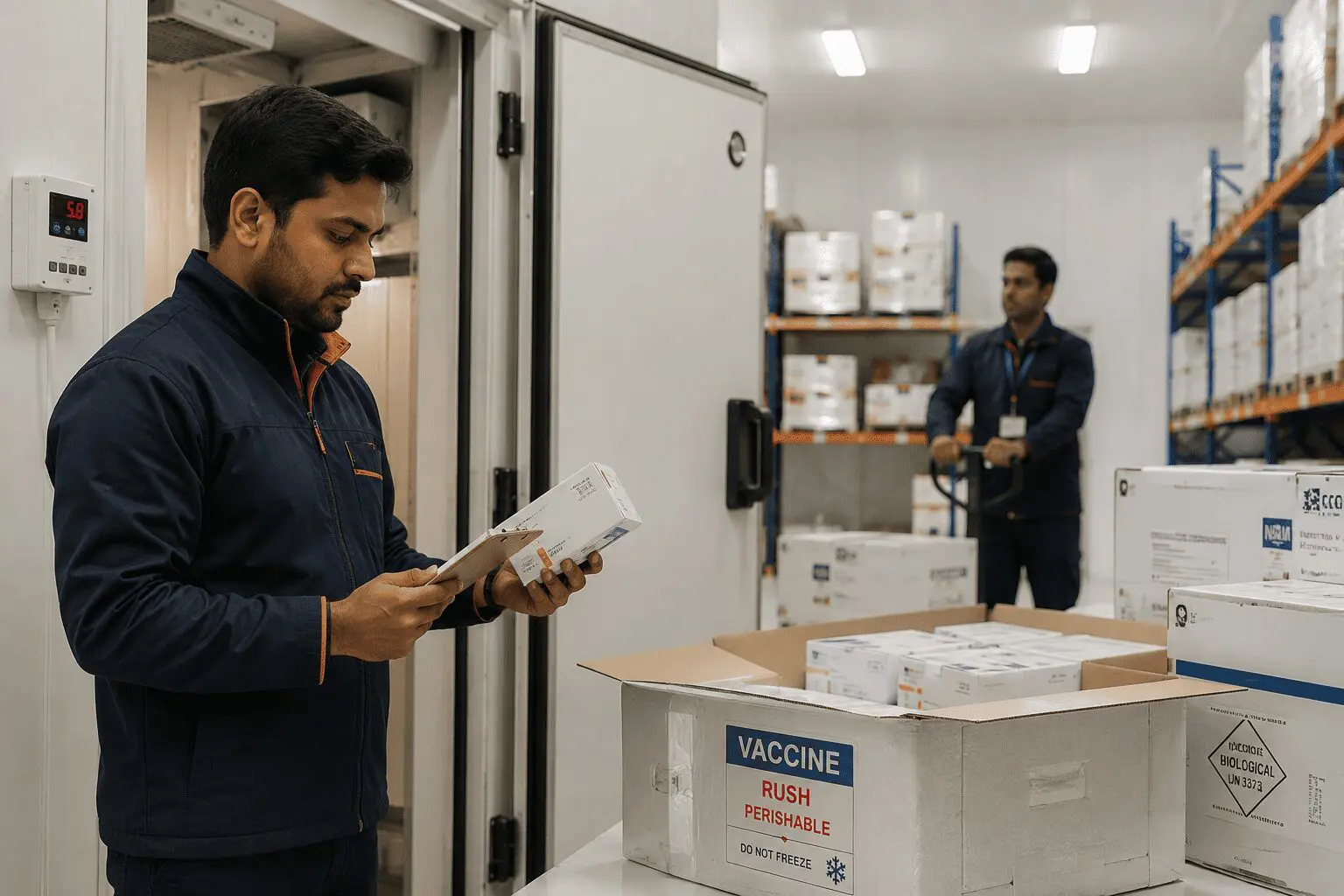
For temperature-sensitive products, the process requires even greater attention. Medicines, vaccines and diagnostic materials may need controlled conditions while awaiting clearance. Proper cold chain planning helps protect product quality during transportation, clearance and storage.
Key Documents for Pharmaceutical and Medical Device Imports
Accurate documentation is an important part of the customs clearance process. The exact requirements can vary depending on the product and applicable regulations.
Common documents may include:
- Commercial invoice and packing list
- Bill of Lading or Air Waybill
- Applicable import licence or approval
- Product registration or regulatory documents, where required
- Country of Origin certificate, where applicable
- Product labels and batch details
- Manufacturer and product information
- Technical or compliance certificates, where required
Importers should ensure that product names, quantities, manufacturer details, batch numbers and other shipment information are consistent across documents. Preparing these details before dispatch can help reduce avoidable customs queries.
Understanding Import Requirements
Pharmaceutical imports may be subject to requirements under the Drugs and Cosmetics Act, 1940 and the Drugs and Cosmetics Rules, 1945, along with applicable regulatory requirements. Medical devices are regulated under the Medical Devices Rules, 2017, with requirements depending on the classification and nature of the device.
This makes correct product classification and applicable regulatory approvals important parts of the import process. Businesses should confirm the requirements for their specific products before the shipment leaves the country.
Common Customs Clearance Challenges
Even small documentation or information mismatches can create delays during customs clearance. Common issues may include:
- Missing or expired licences and approvals
- Incorrect product classification
- Differences between invoices, packing lists and regulatory documents
- Incomplete product or manufacturer information
- Incorrect labelling or packaging details
- Differences in quantity, batch or model information
- Additional customs or regulatory checks
- Lack of suitable arrangements for temperature-sensitive shipments
These issues can increase clearance time and may result in additional storage or handling costs. Early document verification and coordination with customs and logistics teams can help reduce these risks.
Managing Temperature-Sensitive Healthcare Shipments
Some pharmaceutical and healthcare products must remain within a specific temperature range throughout their journey. This includes products such as vaccines, certain medicines, biologics and diagnostic materials.
For these shipments, businesses should plan:
- Temperature-controlled storage and transportation
- Continuous temperature monitoring
- Suitable packaging
- Quick coordination during customs clearance
- Backup arrangements for unexpected delays
Dawn India provides cold chain management, temperature-controlled warehousing and real-time monitoring for temperature-sensitive products, supporting healthcare and life sciences supply chains.
How to Make Customs Clearance Smoother
Good preparation before the shipment reaches the port or airport can make the clearance process more efficient.
- Verify applicable licences and approvals before dispatch.
- Check that product, manufacturer and shipment details match across documents.
- Confirm the correct product classification and applicable customs requirements.
- Keep invoices, packing lists, transport documents and regulatory certificates ready.
- Inform the logistics team if the shipment is temperature-sensitive or time-critical.
- Coordinate with the customs broker and logistics provider in advance.
- Respond quickly if customs or regulatory authorities request clarification.
- Arrange suitable warehousing or cold storage if clearance takes longer than expected.
How Dawn India Supports Healthcare Imports
For healthcare and life sciences businesses, customs clearance is closely connected with transportation, warehousing and temperature-controlled handling. Dawn India provides an integrated range of services covering Customs Broking, Freight Forwarding, Warehousing, Cold Chain Management and Contract Logistics. Its healthcare logistics offering includes customs clearance support, documentation and regulatory coordination, transportation, freight forwarding, warehousing and temperature-controlled storage.
By coordinating these activities through a connected logistics approach, businesses can manage their healthcare shipments more efficiently from port or airport clearance through storage and onward distribution.
Conclusion
Importing pharmaceuticals and medical devices into India requires careful planning, accurate documentation and attention to applicable regulatory requirements. Correct classification, valid approvals, consistent shipment information and timely coordination can help reduce unnecessary customs delays.
For temperature-sensitive products, cold chain planning is equally important to protect product quality during clearance, storage and transportation. With capabilities across customs broking, freight forwarding, warehousing and cold chain management, Dawn India supports businesses in managing the different stages of healthcare logistics and maintaining a more coordinated import supply chain.